

 1-877-206-4279

Use the summer after high school to do four things, in this order. Narrow healthcare from a whole industry down to two or three specific roles. Get real exposure by shadowing or volunteering. Compare schools on clinical placement, accreditation, and start dates rather than tuition alone. Then enroll in a program that stacks, so the credential you earn first counts toward the degree you earn next.
Is Practical Nursing Worth It If You Want to Become an RN? The LPN-to-RN Pathway Explained

Completing a Practical Nursing program does not end the education pathway at the LPN level. After meeting licensure, admissions, prerequisite, and campus-specific requirements, eligible LPNs may pursue an LPN-to-RN bridge or another advanced-standing nursing pathway.
10 Essential Skills Employers Look for on a Healthcare Resume

Your resume has about seven seconds of a hiring manager’s attention, and before it ever reaches a human, it usually passes through software that scans for the skills the job requires. In healthcare and health technology, that makes your skills section one of the highest-value pieces of real estate you own.
Why Becoming a Licensed Practical Nurse is the Smartest First Step Into Nursing in South Florida

South Florida’s healthcare system is growing, and it needs nurses now. The region’s mix of hospitals, nursing homes, assisted living communities, outpatient clinics, and long-term care facilities creates steady, ongoing demand for qualified nursing professionals at every credential level.
Cambridge College of Healthcare & Technology’s Miami Campus Builds Nurses for South Florida’s Busiest Hospital Corridor

From the Nursing Assistant diploma to the ACEN-accredited Associate of Science in Nursing, Cambridge’s Miami Gardens campus offers a full entry ladder into registered nursing with clinical rotations across Miami-Dade and Broward.
Where Will I Do My Clinicals? The Question That Should Decide Where You Enroll

A nursing program needs hospitals, skilled nursing facilities, clinics, and other care settings willing to let students practise on real patients under supervision. Those agreements take years to build, they depend on relationships with specific facilities, and they are capped by how many students a unit can absorb without compromising patient care.
Am I Too Old for Nursing School? A Straight Answer for Anyone Over 35

Nursing programs do not set upper age limits, state boards do not set them for licensure, and employers hiring new graduates are hiring for competence. Nor is the profession quietly hoping you will not apply. Look at how the workforce actually replenishes: the Bureau of Labor Statistics projects roughly 189,100 registered nurse openings each year through 2034.
Nursing Schools Turned Away 93,176 Qualified Applicants Last Year. Here Is What to Do If One of Them Was You.

The American Association of Colleges of Nursing publishes an annual count of qualified applications turned away. In data released in May 2026, that figure reached 93,176 for the 2025-2026 academic year, the highest ever recorded. Two years earlier it was around 63,000. That is roughly thirty thousand additional rejections in a single biennium.
Where Can Phlebotomy Take You? From First Draw to Medical Assistant or Medical Lab Technician
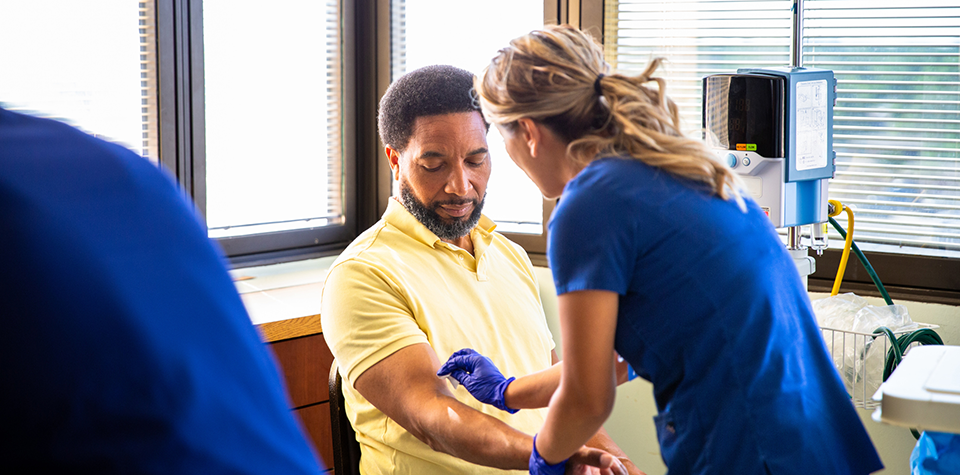
Why an 11-week phlebotomy credential is one of the most practical first steps in healthcare and how Cambridge mentors help you turn it into a Medical Assistant or Medical Laboratory Technician career.